
Transcript
Dr. May:
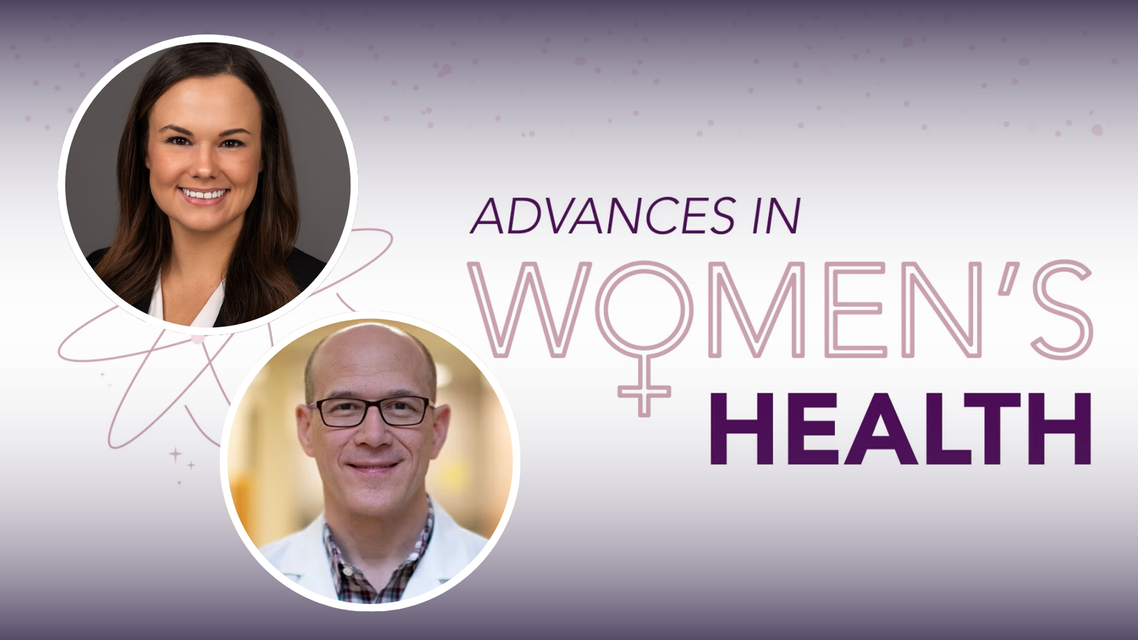
This is Advances in Women's Health on ReachMD, and I'm Dr. Alexandria May. Joining me to discuss the role of contraception in midlife care is Dr. Mitchell Creinin, who's a Distinguished Professor and the Director of the Complex Family Planning Fellowship at UC Davis Health Medical Center in Sacramento. Dr. Creinin, welcome to the program.
Dr. Creinin:
Thank you for having me.
Dr. May:
So let's start by taking a look at the current guidance. The American College of Obstetricians and Gynecologists recommends that contraception be continued until menopause is confirmed or until age 55 when spontaneous conception becomes exceedingly rare. Dr. Creinin, can you put that guidance into context and explain why contraception is still an important consideration during the menopause transition?
Dr. Creinin:
Well, thank you for the question. I love it, and I love that you stressed the age of 55. Way back in the dark ages when I was doing my fellowship, my very first study was looking at this exact question.
The important thing for listeners to be aware of is that we know that fertility declines during perimenopause, but the possibility of pregnancy remains. We also know that irregular cycles don't necessarily indicate the end of ovulation or fertility. They just mean that ovulation is not occurring as regularly, but it is still occurring. We know that about 5 percent of women will have regular cycles or continue to menstruate until the age of 55 when fertility is still possible.
So the recognition by the American College of Obstetricians and Gynecologists that there is an ongoing risk of unintended pregnancy during the menopausal transition is reflected in this guidance, and it provides an opportunity for us as providers to keep reproductive health and contraceptive planning part of routine perimenopausal and midlife care.
Dr. May:
And to give our audience a little more background here, what's happening physiologically during perimenopause that makes fertility and ovulation difficult to predict?
Dr. Creinin:
This is something I go over commonly with my patients, and I try to summarize it in an easy way for them to understand, which is the perimenopause is a time that at times, the body thinks it's 26 and at other times, it thinks it's 66. So a woman may ovulate regularly for a few cycles like she's 26, and then all of a sudden, it’ll be like she's 66 and have hot flashes and not be ovulating; and you can go back and forth. And there have been some amazing studies in the past that have shown a period of a few months in laboratory testing look exactly like menopause and then boom, ovulation occurs.
So pregnancy definitely remains possible until menopause is established, which we know doesn't occur until a woman has gone a full year without a spontaneous menses.
Dr. May:
For those just tuning in, you're listening to Advances in Women's Health on ReachMD. I'm Dr. Alexandria May, and I'm speaking with Dr. Mitchell Creinin about contraceptive counseling during the menopausal transition.
So, Dr. Creinin, now that we've established the importance of contraception during this phase of life, let's talk about some of the available options. What do we know about the effectiveness of hormonal intrauterine devices, or IUDs, for pregnancy prevention, and how might they support the broader care of patients during midlife?
Dr. Creinin:
In my practice, hormonal IUDs are a very important part of the discussion because of the benefits that not only occur in perimenopause but can continue into menopause. But it's important that I always say to my patients, "These are options, and there are a lot of different methods available for people, and people have individual reasons why they might prefer one method over another." So it's one of the many options.
One of the reasons I really like it is for the 52-milligram levonorgestrel IUD specifically; it has a long duration of use. One of the biggest complaints for patients during perimenopause is the irregularity of bleeding, and we know that the 52-milligram levonorgestrel IUD will significantly decrease flow and make bleeding, even if it's irregular, incredibly light. And this can then continue to provide uterine protection as she goes into menopause. So you get the few years during the perimenopause that you get contraceptive protection and management of irregular bleeding, and then into the menopause, you then can get endometrial protection should she choose to use estrogen.
The other thing that's a benefit is when somebody uses systemic hormones in the perimenopause, because there's times when the HPO axis is working and driving the ovary to ovulate, we can't give menopausal hormones and give regular bleeding. We have to still take over the HPO axis, which means we need to use something along the lines of oral contraceptives.
If a 52-milligram levonorgestrel IUD is being used to provide contraception and control bleeding, a woman with intermittent vasomotor symptoms can then be using menopausal hormones like an estrogen or estradiol patch rather than a higher level of hormones that is required for systemic combined oral contraceptives.
Dr. May:
One area that often comes up is changing menstrual patterns. Knowing that, how can hormonal IUDs help patients who are experiencing heavy bleeding, cramping, or dysmenorrhea during perimenopause?
Dr. Creinin:
And these are common complaints that you bring up because people will go months at a time without bleeding, and then all of a sudden, they bleed and it can be heavy. It's unpredictable, as you stated. And as we talked about, people are looking for ways to manage both their bothersome menstrual symptoms, provide contraception because they know they're still at risk, and enable themselves to continue a regular lifestyle day to day.
And 52-milligram levonorgestrel IUDs have been shown to reduce heavy menstrual bleeding. They are a highly effective treatment for abnormal uterine bleeding and will, for most patients, also improve any cramping or dysmenorrhea they experience, especially when that dysmenorrhea is related to the heavy flow that can be occurring.
So this is, as I alluded to earlier, a really great option for people amongst all the options that they can choose from depending on their individual preference.
Dr. May:
Let's shift gears now and talk about how these conversations play out in clinical practice. What strategies can clinicians use to keep contraceptive counseling relevant and integrated into routine midlife visits?
Dr. Creinin:
I think an important part of midlife care, as it is for care throughout the reproductive lifespan, is talking about sex and sexual activity. That's a normal part of questioning. If a patient comes in to talk at an annual exam, a preventive exam, a contraceptive visit, or even a visit just to talk about her symptoms, it's important to talk about sexual activity, especially if she's in the perimenopause, because one of the symptoms of perimenopause is vaginal dryness, and we want to make sure that area is covered.
Some women are shy or embarrassed to talk about it, so I make sure to bring that up to make sure they know that it's a normal thing to talk about. And this leads to a general discussion of sexual activity and sexual satisfaction. And along with that naturally comes the discussion about the need to prevent pregnancy if it's not wanted.
Keep in mind that in this age group, unintended pregnancy is the highest proportion of pregnancies that occur outside of teens. So teens may have the highest unintended pregnancy rate, but the second-highest unintended pregnancy rate as the proportion of pregnancies comes in women who are 45 and older. So it's important for us to bring this up as a real issue. It does occur, and it's our responsibility to make sure we bring this up to help patients reach their personal goals.
Dr. May:
And finally, Dr. Creinin, if there's one thing you'd like clinicians to take back to their practice after our conversation today, what would it be?
Dr. Creinin:
I think part of the transition from reproductive years through the perimenopause to menopause is a time that we sometimes start to consider that treatments need to be different. We may have provided contraception in one way for a 30-year-old, and I remember years ago people were thinking about different pills and how some would be better for people in the perimenopause. The reality is a woman who wants to avoid pregnancy who's perimenopausal has the same desire for regular cycles, improvement of her cycles or dysmenorrhea, and her same desire for high efficacy for pregnancy prevention as she did when she's 30.
So the methods really aren't different, or you shouldn't consider different methods. We need to consider what methods best meet her needs at that time of life, which when it comes to highly effective methods that control bleeding well and work well from a day-to-day adherence standpoint, those are the same methods whether she's 30 or perimenopausal. So it's just part of the normal discussion of pregnancy prevention and the non-contraceptive benefits that you can get out of many contraceptives.
Dr. May:
Those are some wonderful points for us to think on as we come to the end of today's program. And I want to thank my guest, Dr. Mitchell Creinin, for joining me to explore how contraceptive counseling can help women navigate the menopausal transition. Dr. Creinin, it was great having you on the program.
Dr. Creinin:
Thank you for having me.
Dr. May:
Thank you.
For ReachMD, I'm Dr. Alexandria May. To access this and other episodes in our series, visit Advances in Women's Health on ReachMD.com, where you can Be Part of the Knowledge. Thanks for listening.